by Oliver Sheppard
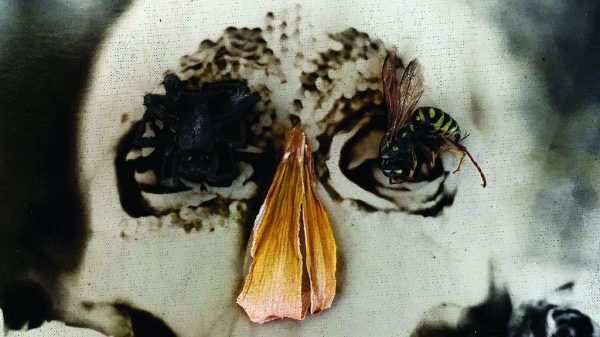
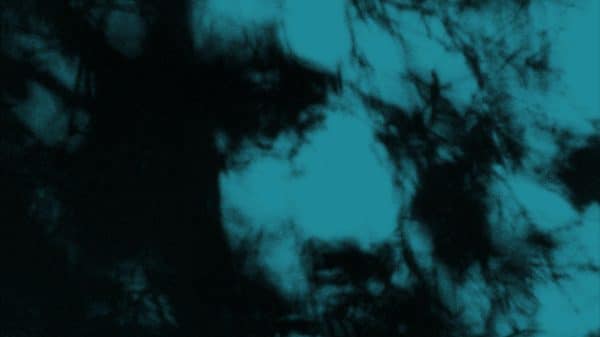
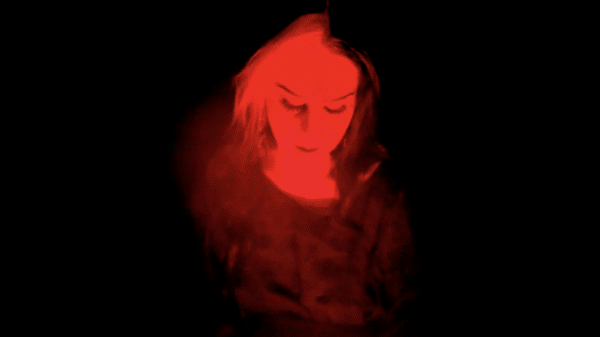
Christopher “Ilth” Erickson has sung for Chicago punk bands like the Functional Blackouts and Daily Void; the latter was a band that was often compared to Rudimentary Peni. Nowadays he plays bass in the dark punk band Cemetery. What fans of these bands may not know is that Ilth is a prolific artist who works with a variety of media: collage, sculpture, and various assemblages that all somehow recall the weird fiction of HP Lovecraft, the alternate and surrealistic universes of Max Ernst, and vintage sci-fi/horror. Ilth has had six exhibitions of his work in the past year alone. His visual work is a fine complement to the strange and dark music he’s been involved with, but it’s also sufficiently remarkable to be taken on its own and completely separate merits.
Below is an interview I conducted with Ilth recently, as well as a visual essay of his amazing artwork.

Note: This interview originally appeared at the No Doves Fly Here website.
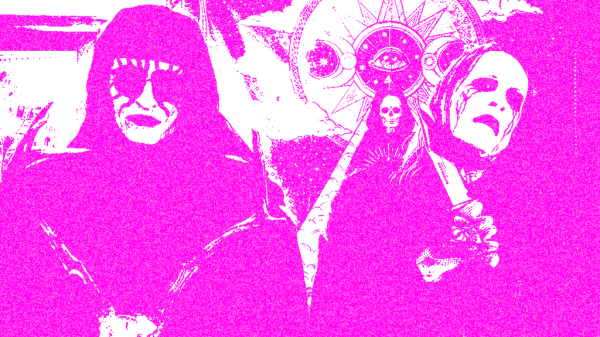
New PDX band Dead Cult have never used the word “deathrock” to describe their sound, preferring instead the term “anarcho darkwave.” Reminiscent at times of Hysteria, Rubella Ballet, or maybe even Skeletal Family, the music — whatever label you choose to apply to it — is exceptionally good, especially for a band this young. Guitar-driven postpunk rock from the dark side.
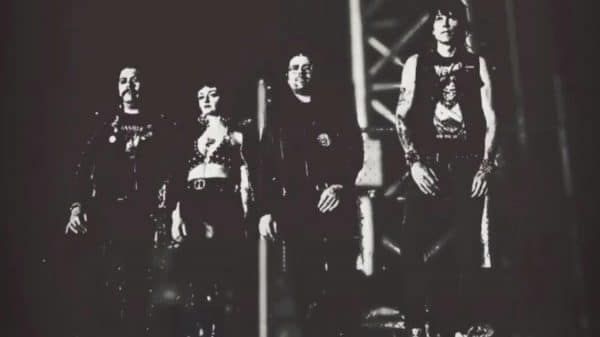
It’s hard to believe that Dead Cult has existed for just over half a year. When listening to their tracks, many of which are available freely on Youtube, and some of which are below, I was surprised to find out how young the band were. The musicianship, confidence in the vocals, etc., is far beyond the band’s years. Dead Cult have a Facebook page here; most pictures below are from that.
by Oliver Sheppard
Blue Cross began as a side-poject of Ottawa, Ontario’s Germ Attak. While Germ Attak played loud, brash, hard-drinking punk rock and roll, Blue Cross employ a darker approach: Their sound is pure, modern goth-punk. The dark and echoey female vocals lend the songs on their 2011 Mass Hysteria LP to inevitable comparisons with early Siouxsie and the Banshees and Xmal Deutschland, two obvious sonic points of reference. The influence of old LA deathrock like Voodoo Church, or deathrock-tinged California punk like Red Scare, is also there. Perhaps owing to Blue Cross’s pedigree in DIY punk, the songs retain an overall powerful punch missing from postpunk bands that are often all too happy to forget about the punk roots of their sound. Even a track like “End up Alone,” which employs Bauhaus-style atmospherics, remains an invigorating stomper of a song.
The eight tracks on Mass Hysteria careen between mournful, Superheroines-style deathrock (“Bring Out Your Dead”), to Wire-like noisy experimental rock (“Calling Combatants”), to tribal drumming-backed positive punk rockers, as in the “Mass Hysteria” title track. As with most new punk bands exploring this eerie, retro-deathrock territory, there is the undeniable — but welcome — influence of anarcho bands like Lost Cherrees and Rubella Ballet in the mix. The production and songwriting on Mass Hysteria is top-notch, however. The tracks do not blur together into one indistinguishable, goopy gothic lump. Every song feels like its own, self-contained musical journey. Mass Hysteria is one of the key LPs of punk’s new deathrock fascination, and it stands out head-and-shoulder above the pack. (If you want a quick-and-dirty guide to this “new deathrock,” see my “Deathrock 2012″ mixtape here on CVLT Nation, which features 27 tracks of new gothic punk music made from 2008 to the present.)

READ MORE…
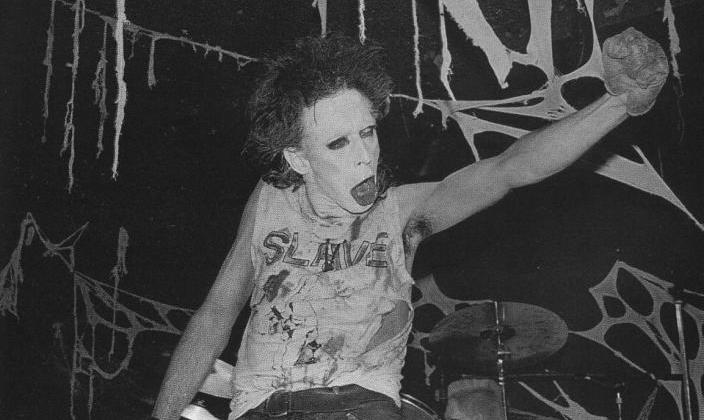
The S-Haters were a British dark punk band that existed from about 1976 until 1985. They played — well in advance of the trend — a type of gothy punk rock that would later be called, by others, “deathrock,” “gothic punk,” or just “goth.” In many ways the band has never gotten their due.
The original lineup featured Nick Blinko of anarcho-deathrock band Rudimentary Peni, and in fact the S-Haters started out on Outer Himmalayan Records, the label owned by Rudimentary Peni. Despite releasing four EPs, 1 LP, and having appearances on various goth-punk compilations, the S-Haters are still strangely unknown. In fact, while Ian Glasper’s excellent and very recommended The Day the Country Died included interviews with some anarcho-affiliated deathrock bands like Part 1, the S-Haters, who were also affiliated with the anarcho-punk scene, were not featured in that book — despite their having played the Crass-affiliated Autonomy Centre and actually having a much lengthier discography than many bands in The Day the Country Died.
So here is an in-depth interview with S-Haters’ singer, Kieron O’Neill, and guitarist Kevin O’Brien, at long last.
S-Haters singer Kieron O’Neill was interviewed by Oliver in June, 2012. The interview with guitarist Kevin O’Brien was done in 2006 for the now defunct Cultpunk website.
It’s fun to use the internet as a time machine and go back to an era that has been forgotten! Sometimes we forget that metal and punk were created by outsiders who didn’t have a voice in society at large, so they created their own world. One form of Metal put Florida on the map, and that was fucking DEATH METAL. One mini-documentary that captures this scene is Thrash till Death. This film allows the people who created this art to tell the world what the music meant to them on their own terms. It’s pretty epic to hear what Death, Napalm Death, Obituary and more have to say. So now it’s time to see how the sun shone on the tombstones, and death metal was born – peep the Thrash till Death documentary after the jump!

READ MORE…
(Note: This interview first appeared at the No Doves Fly Here site a few months ago.)
The Bay Area’s Alaric have received positive attention on CVLT Nation before; their recent split with Atriarch, reviewed here, was amazing. Members have played in such great bands as Noothgrush, Dead and Gone, and Cross Stitched Eyes. Alaric themselves, however, have a darker, more postpunk approach to music that takes as many sonic cues from bands like Part 1, Killing Joke, or Amebix as it does from any previous projects members have been involved with. The band have been playing a lot of shows with deathrock bands like Fangs on Fur and Altar de Fey. Alaric’s music is a melancholy, downtempo, introspective form of hardened postpunk that marks a new and distinct turn from the sound of members’ bands in the past. They’ve been one of my favorite current projects and I can’t wait to see where they will go next in their sonic evolution.
This is an interview with Shane, Alaric’s singer, and Rick, the bassist. Thanks to Jason Willer, drummer of Alaric and also singer of Cross Stitched Eyes, for help with this interview.
Perhaps to this day very few Killing Joke listeners have understood the definitive instruction hidden within an album of overall conceptual destruction.
Killing Joke’s MMXII (“2012″) LP came out a couple of months ago, featuring the band’s original late 1970s lineup. As one might expect, it was a fiery and apocalyptic mix of their singular metal-punk hybrid, with strong darkwave and postpunk overtones. The LP will surely be, in retrospect, one of 2012′s best. And Killing Joke still remain a singular animal in the world of music, somehow straddling many genres yet belonging to none of them.
Countless are the number of bands, from crust bands like Amebix, to metal bands like Metallica, to industrial bands like Godflesh, to postpunk bands like 1919, that have cited the Joke as a seminal influence. Their influence even threads through the current black metal and crust scenes; Das Oath and Behemoth have both covered the band. That Killing Joke, who originally toured with Joy Division (and even featured Joy Division/New Order bassist Peter Hook in a brief lineup) is still going, with the original members no less, is nothing short of incredible. They have explored many styles throughout their varied catalog, covering punk, goth, metal, crust, and industrial — and everything in between.
This is a salute to Killing Joke’s 33+ year legacy, which is still going strong. They have concerts coming up in the Fall with The Cult and Mission UK. Here’s a trip through Killing Joke’s catalog, highlighting the high points in their career.
What would it sound like if Killing Joke and Motorhead had collaborated in 1982? You know, when Killing Joke were working on their apocalyptic, postpunk Revelations LP and when Motorhead were coming off the ungodly high of having finished their Ace of Spades masterpiece? You could argue that Montreal’s The Complications (named after a Killing Joke song, in fact) are one possibility. Post-punk d-beat? Whatever it is, it’s awesome.
This is an interview I did with The Complications in 2006 at my now-defunct Cultpunk site. But it’s still as timely as ever. At that time, in 2006, The Complications were billed as a side-project of Canadian d-beat monsters Born Dead Icons, a great band that I had the good fortune to see (and photograph) a few years before that, in Texas. In fact, The Complications did start as a more postpunk-oriented side project of Born Dead Icons. The Complications did eventually succeed the Born Dead Icons, however, and their self-titled LP finally came out in 2010 on Feral Ward, though it was recorded in 2007. I was lucky enough to get to interview them during that period.
One record that I went apeshit for last year was LOST TRIBE’s debut album on Blind Prophet – it is a modern day D-Beat/Deathrock classic! Everything about this band’s music gets me stoked, from their dirty baselines to their awesome lyrics and dynamic vocal delivery. The good news is that LOST TRIBE have just released a spot on video for GUNK. It’s a trippy black & white performance visual that captures cryptic spirit of the tune! So tune into a band that marches to the boneyard beat, and they just might put you under their spell…peep LOST TRIBE GUNK video below.
Vancouver, British Columbia’s Spectres released one of the finest LPs of 2010, Last Days. “[T]he dark side of 80′s anarcho punk and the coldness of early 4AD and Factory records releases,” Interpunk says of the album, not inaccurately.
Likewise, the Spectres’ 2007 “Cold War” EP opened a lot of eyes (and ears) at the time, and it is frankly stunning to think that that came out half a decade ago. The band play an especially well-made type of dark punk that magazines like Maximum Rock ‘n Roll have likened to early Joy Division, Crisis, and early 80s UK peace punk like The Mob. They’ve been a favorite for awhile and I was more than stoked to hear that within the next few months (as of April, 2012) the band are releasing a new LP, Strange Weather! The band have a website here, a Facebook page here, and a Myspace page here.
I got to interview Brian, the singer, and Zach, the guitarist, recently in advance of their upcoming Strange Weather LP.